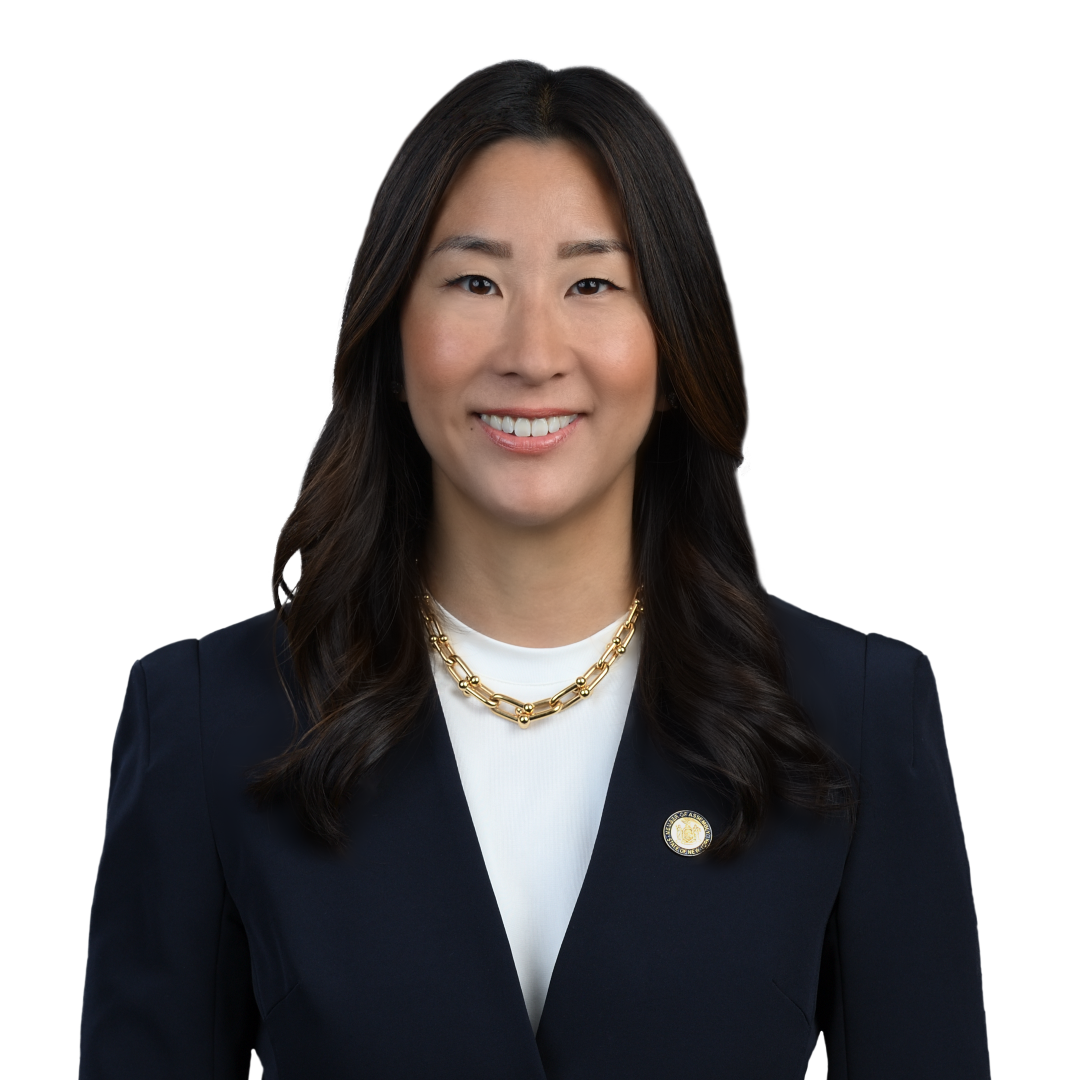
Assemblymember Grace Lee Champions Lower Manhattan in 2025 Legislative Session
In her third session in the New York State Assembly, Assemblymember Lee passed key legislation to support Lower Manhattan residents
Albany, NY – On Tuesday, June 17, 2025, New York State’s 2025 Legislative Session concluded. This year, Assemblymember Lee fought to address the needs of Lower Manhattan residents by successfully passing legislation to strengthen the local economy, safeguard public health, and uplift underserved communities.
“I ran for office to give Lower Manhattan residents a voice in government, and the legislation I passed this session delivers meaningful progress for our communities,” said Assemblymember Grace Lee. “These bills bring real, positive change to our district: local parents will no longer be helpless when their children are exposed to toxic brownfield sites; businesses will get a boost through tax incentives to build a more vibrant commercial corridor; our democracy will be stronger with more transparency and local participation in polling site decisions that impact our neighborhoods; and for the first time, New York will begin the process of ensuring Asian American history is being taught in our schools, so students from our communities see their stories reflected in classrooms and textbooks. It’s an honor to continue serving Lower Manhattan in the Assembly and to fight for a future that’s safer, stronger, and more equitable for all.”
The bills Assemblymember Lee sponsored and passed include:
New York AANHPI Education Equity Act
Assemblymember Lee sponsored and passed the New York AANHPI Education Equity Act (A8463) to study how public schools across New York are teaching Asian American history and to create an advisory committee to recommend how best to incorporate AANHPI history instruction into school curriculum. Specifically, the legislation directs the Education Commissioner to conduct a statewide survey on the current status of Asian American, Native Hawaiian, and Pacific Islander (AANHPI) history instruction, examining how and where this curriculum is being taught. The survey will help identify challenges, gaps, and opportunities for improvement. It also creates a first-of-its-kind AANHPI Advisory Committee, which will provide recommendations on how to incorporate AANHPI curriculum statewide.
These efforts are an important step to pave the way for the eventual goal of a statewide mandate to require all New York public schools to teach AANHPI history.
Expansion of Brownfield Technical Assistance Grant Program
Assemblymember Lee sponsored and passed a bill to expand the Brownfield Technical Assistance Grant Program (A5714) to give communities access to technical assistance grants when a brownfield cleanup site is located near schools or daycare centers. This bill allows communities to get grants to fund technical representation during remediation processes, helping protect families from exposure to harmful toxins. Assemblymember Lee’s advocacy for this issue was inspired by her community activism opposing the unchecked development of a brownfield cleanup site across from her child’s school at 250 Water Street in the South Street Seaport. This bill was also passed in 2024 but vetoed by the Governor. Assemblymember Lee and Senator Kavanagh will be looking to build support for the Governor to get it signed this year.
Extension and Expansion of Key Business Relocation Incentive Programs Assemblymember Lee sponsored and passed legislation (A8676) to extend and expand key business relocation incentive programs, including the renewal of the Lower Manhattan Relocation and Employment Assistance Program (LM-REAP)—a vital economic development tool that has supported job creation and business growth in Lower Manhattan for over two decades.
With commercial leasing activity at historic lows, this extension comes at a pivotal moment for the area’s economic recovery. In 2024, Lower Manhattan experienced its worst leasing year on record, with activity 40% below the five-year average. Office vacancy has surged to 24%, exceeding the levels seen after 9/11 and the 2008 financial crisis, with over 20.8 million square feet currently available for lease. LM-REAP offers relocation and employment tax credits to businesses that move into designated areas of Lower Manhattan, incentivizing investment and job creation. In neighborhoods like Chinatown, this translates into increased foot traffic for restaurants and small businesses, as office workers buy lunch, shop after work, and host events, ultimately revitalizing the local economy.
Requiring Notification for Changes to Polling Locations
Assemblymember Lee sponsored and passed legislation (A7618) to require the Board of Elections (BOE) to provide timely notice of polling place changes to local elected officials and party leaders within five days of being informed that a polling place must be changed. Under current law, voters must be notified of polling location changes, but elected officials and party leaders are not explicitly included in notification requirements. Giving notification to elected officials and party leaders provides them the opportunity to potentially engage with the BOE on poll site relocations and communicate changes to constituents. The legislation was drafted in response to community concerns after the last-minute relocation of the JHS 56 early voting polling locations ahead of the 2024 primary election. The bill will ensure greater transparency and coordination among the BOE, elected officials and community leaders, and help to prevent voter disenfranchisement due to last-minute poll site relocations.