Santabarbara, Legislators Highlight Recommendations from Report on Rural Ambulance Services
Action urged to prevent system collapse
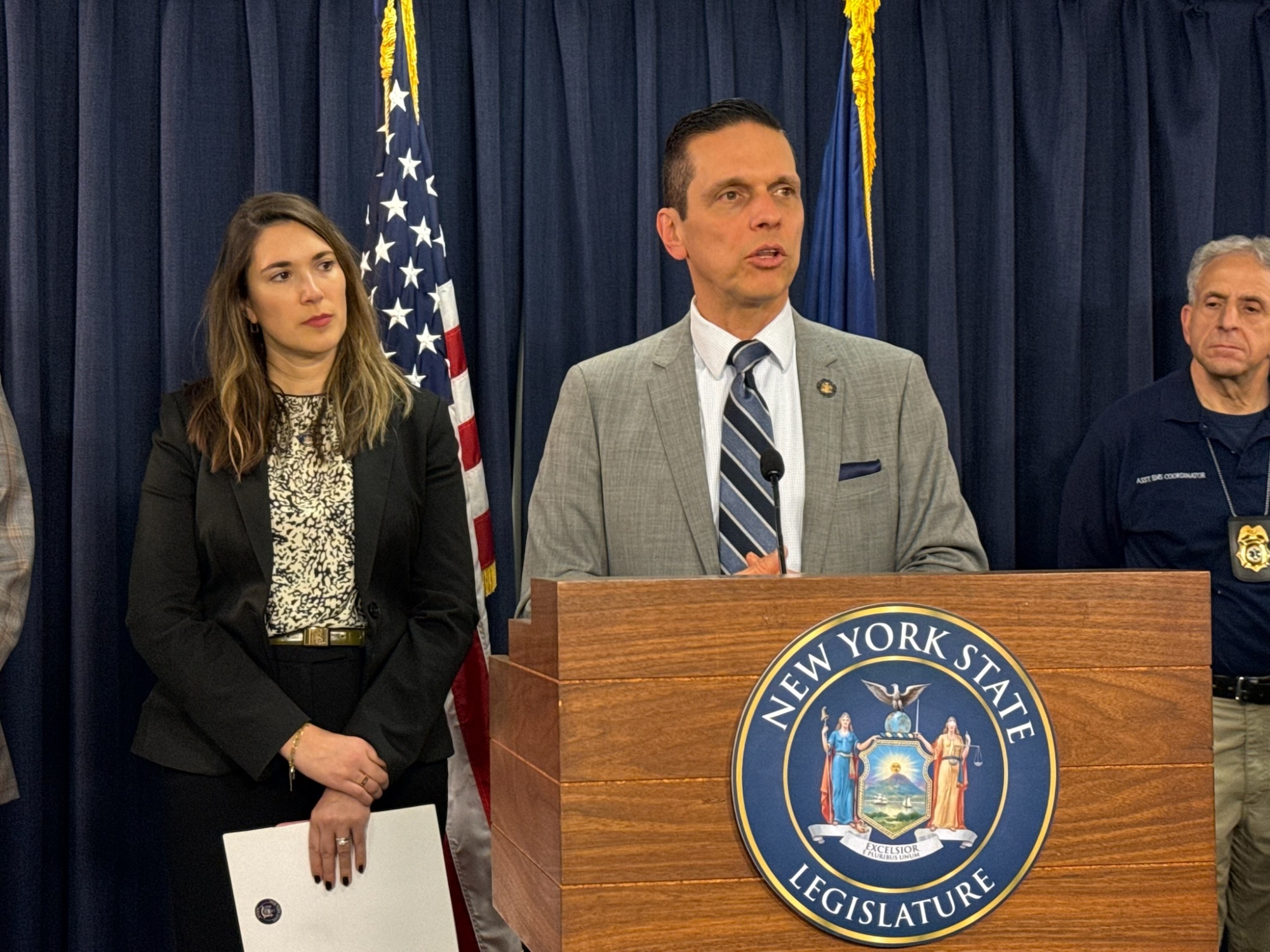
Assemblyman Santabarbara, Senator Hinchey and Assemblywoman Donna Lupardo joined the NYS Association of Counties, the NYS Volunteer Ambulance and Rescue Association, members of the Rural Ambulance Services Task Force, and others to highlight the Report on Rural Ambulance Services.
The Rural Ambulance Services Task Force was created by legislation passed in 2021 Assemblyman Santabarbara and by Senator Hinchey (S3503C/A1561C). The Task Force’s main objective was to conduct a study on the unique challenges faced by ambulance services in rural areas. Their report released in January describes the rural EMS system as “teetering on the brink of collapse” due to long ambulance wait times, funding shortfalls, and barriers to volunteer recruitment, among other issues. The report provides nearly 40 recommendations, with Medicaid rate increases being one of the most important during this budget cycle.
Assemblyman Angelo Santabarbara said, “This report confirms what many communities across New York are already experiencing — our rural EMS system is being stretched to the limit. In too many areas, the emergency response system people rely on is hanging by a thread. Ambulances are not a luxury service; they are a lifeline. When someone calls 911, every second matters, and every community should have confidence that help will arrive. This report gives us a roadmap, and our work is clear: the state must step up with the funding and policy changes needed to keep ambulance services strong and reliable. The state budget gives us the opportunity to act.”
Senator Michelle Hinchey said, “We created the Rural Ambulance Services Task Force to get recommendations directly from EMS providers on solutions our State Legislature can implement to protect healthcare access for millions of New Yorkers. The progress we’ve made is critical – including our law that ensures EMS can be reimbursed for on-scene emergency care and for transporting patients to non-hospital settings – but more must be done. We need to recognize EMS as an Essential Service and fix long-outdated Medicaid reimbursement rates that have failed to keep pace. We will continue championing our providers’ recommendations to protect these lifesaving services and the dedicated professionals who deliver them.”
Assemblywoman Donna Lupardo said, “The Task Force report confirms what many of us have been warning about for years; that EMS services, especially in rural areas, are at risk. While our coordinated #RescueEMS campaign raised awareness and passed several helpful bills, it’s clear that much more needs to be done. Our highest priority is to acknowledge that the current funding model is unsustainable, with Medicaid reimbursement rates woefully inadequate. My hope is that this report will move people to act on behalf of the public whose health and safety is at risk.”
Michael Benenati, Vice Chairman, NYS Rural Ambulance Service Task Force, said “The Legislature has taken meaningful steps toward addressing the challenges facing our emergency medical services, and their commitment to strengthening EMS across the state deserves recognition. Their willingness to confront outdated funding structures, provide exemptions on the two-percent tax cap, enable counties to establish countywide EMS taxing districts, when necessary, explore reforms to Medicaid reimbursement, and consider new mechanisms that give counties the ability to build sustainable EMS systems demonstrates a strong understanding of the realities we face in the field. We appreciate their continued collaboration and leadership as we work together to ensure that every New Yorker—regardless of geography—has timely access to dependable emergency medical care.”
Stephen Acquario, Executive Director, NYS Association of Counties, said “The findings of the Rural Ambulance Services Task Force reinforce what county leaders have been warning for years: our EMS system is under significant stress, particularly in rural communities where long distances, workforce shortages, and rising costs make it increasingly difficult to sustain reliable coverage. Ensuring that every New Yorker has timely access to lifesaving emergency care will require strong partnership between the state and our local governments, and state resources will be needed to stabilize and strengthen EMS systems across our communities. We commend Senator Hinchey, Assemblymember Lupardo, and Assemblymember Santabarbara for their leadership in elevating this issue and helping advance solutions that will strengthen EMS across the state.”
Steven Kroll, Chairperson of Legislative and Government Affairs, NYS Volunteer Ambulance Rescue Association, said, “The Rural Ambulance Task Force report underscores the crisis facing EMS providers in NYS, especially in rural communities. Every New Yorker has the expectation that trained emergency medical responders will promptly respond in their time of need. The Task Force report provides a roadmap for change that policymakers can use to assure sustainability for the many ambulance organizations dedicated to serving their communities. EMS organizations and first responders need investment in education and workforce, ambulance payments that cover the cost of delivering care, and a regulatory framework that encourages innovation. “
Thomas Coyle, President, United New York Ambulance Network, said, “There is an EMS crisis in New York. Inadequate funding, outdated Medicaid reimbursement rates, workforce shortages, rising operational costs, and concerning provisions in the proposed state budget all will only further destabilize ambulance providers if not addressed. The Rural Ambulance Task Force report highlights many of the challenges facing EMS. It’s critical any policy response focus first on stabilizing ambulance providers through sustainable funding and reimbursement reforms. UNYAN appreciates the leadership of Assemblymembers Donna Lupardo, Angelo Santabarbara and Senator Michelle Hinchey for elevating the conversation around rural EMS. When rural ambulance services struggle, patients and families suffer the consequences first. New York must act to ensure communities have reliable ambulance coverage today and into the future.”