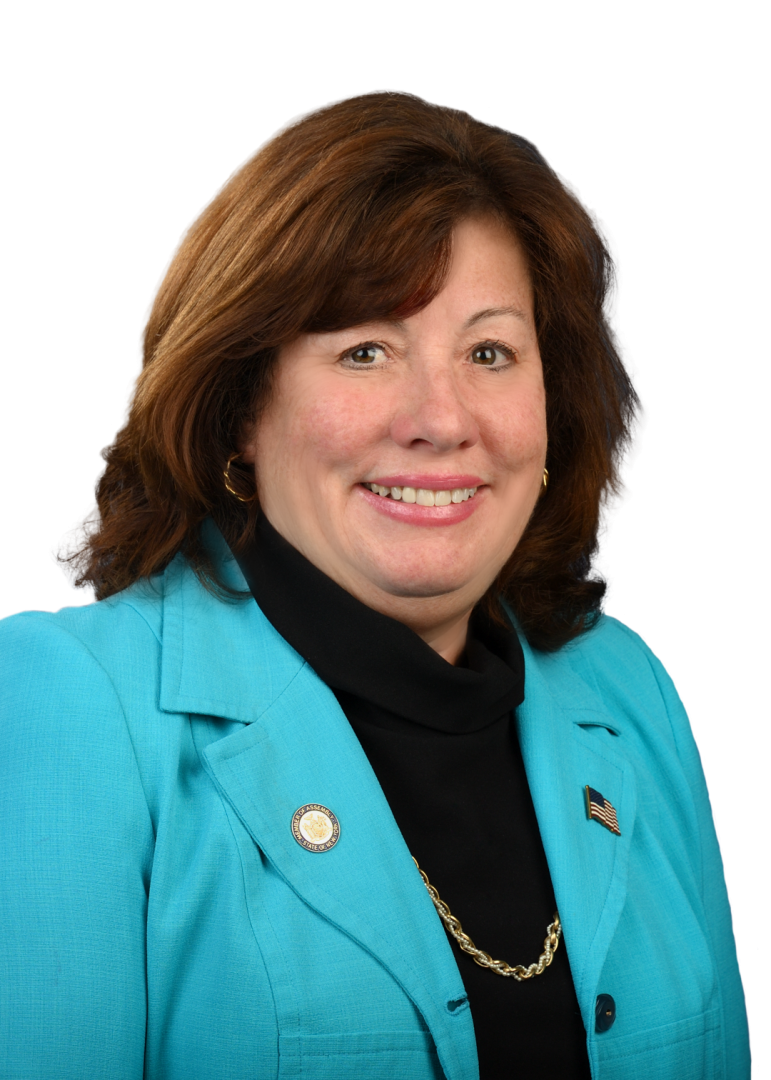
Assemblywoman Buttenschon’s Response Following the State Assembly’s Advancement of the Assembly One-House Budget Resolution
Albany, NY – Assemblywoman Marianne Buttenschon (D-119) is responding today following the New York State Assembly’s advancement of the Fiscal Year 2027 Assembly One-House Budget Resolution in Albany. The Chamber’s $266 billion budget proposal outlines the Assembly’s fiscal agenda and priorities for the 2026-2027 budget year, and recommends to the Governor inclusion of significant investments in small business support, healthcare, education, agriculture, and local projects.
“Yesterday, we passed the Assembly One House Budget Resolution. I worked with my colleagues to draft this resolution, and while I understand that this is only the framework for our discussions over the next few weeks as we negotiate for a final budget, I am committed to working towards making life more affordable and providing the necessary support for our upstate communities to thrive,” said Assemblywoman Buttenschon. “This One-House Resolution addresses a wide range of issues, and while I agree with some points and disagree with others, there remains much work to be done to provide workable and enduring solutions to the priorities highlighted today.”
The Assembly’s One-House Resolution includes several meaningful steps to support small businesses and economic development initiatives throughout the state of New York. The Assembly’s One-House Resolution introduces new measures designed to provide financial flexibility to the entrepreneurs and small business owners that drive our local economies, including the newly proposed Small Business Hardship Savings Accounts program, which allows qualified businesses with fewer than 25 employees to contribute up to 10 percent of net income into a tax-deferred savings account, and an increase to the current small business subtraction modification from 15 to 25 percent of net income. Furthermore, the Assembly’s proposal provides $8.9 million in additional funding for the Centers for Advanced Technology and $9 million for the New York State Centers of Excellence, thereby allocating a total of $1.5 million for each of the programs centers respectively, in addition to $3 million for the New York State Innovation Hot Spots and New York State Incubators, for a total of $8 million, as well as a carveout of $300,000 for costs associated with the administration and coordination of regional hot spots throughout the State.
“As I’ve said before, a strong economy is built upon strong small businesses,” said Buttenschon. “As Chair of the Small Business Committee, I will continue to fight to see that the Assembly One-House Budget takes steps to put more resources directly into the hands of our small business owners and residents. The Hardship Savings Accounts and increased subtraction modification will provide financial relief to the backbones of our economy, while the additional investments in our Centers for Advanced Technology, Centers of Excellence, and Innovation Hot Spots will help connect our universities, businesses, and entrepreneurs with the resources and mentorship they need to grow. I will continue to advocate to ensure these investments are not only enacted, but that they reach every small business
owner across the Mohawk Valley and our State.”
The Assembly's one-house budget resolution proposes a 1% reduction in the income tax rate for taxpayers earning less than $323,200, while increasing the personal income tax rate for individuals earning above $5 million. For the residents of the 119th District, where approximately 90% of households fall below the $323,200 threshold and roughly 3% earn above $5 million, this proposal would deliver direct tax relief to the overwhelming majority of Mohawk Valley families. Furthermore, as families continue to face pressures due to the rising cost of living, Assemblywoman Buttenschon and the Assembly have additionally been focused on addressing the pressing burden of rising utility bills:
“Rising energy costs are impacting people and businesses across the state and certainly in our local communities. The Assembly’s budget Resolution prioritizes utility relief, including a 2-year moratorium on implementing the already approved rate increases and on any new actions that would increase utility rates. Today’s One-House Budget Resolution has proposed pausing utility assessments on ratepayers, providing rebates to utility customers, and establishing a commission on utility rates to address the root causes of rising utility rates and develop a report proposing practical solutions to bring down costs.”
The Assembly's one-house budget resolution includes investments in healthcare access and stability across New York State. The resolution provides $516.6 million to restore the Vital Access Provider Assurance Program (VAPAP) for financially distressed hospitals, an additional $80 million to maintain solvency of the Medical Indemnity Fund, and $20 million to increase reimbursement rates for Children's Behavioral Health services in Medicaid. The resolution also directs a distribution of $4 billion from the Healthcare Stability Fund, allocating
$193 million for nursing homes, $155 million for hospitals, $40 million for clinics, and $12 million for Assisted Living Providers.
“Hospitals and nursing homes across Upstate New York have been struggling with rising costs and stagnated reimbursement rates for years, and Federal cuts to Medicaid have only added to these challenges, placing healthcare access at risk across the state,” said Buttenschon. “We’re proposing a
$1.2 billion increase in financial support for hospitals and nursing homes across New York State.”
The Assembly proposes state educational and school aid funding totaling $39.4 billion, representing an increase of
$905.6 million over the Executive Proposal and a $2.1 billion increase over State Fiscal Year 2025-26. This includes a $630.6 million increase to fund Foundation Aid over the Executive Proposal, which would be a $1.4 billion increase over School Year 2025-26. Additionally, the Assembly Resolution provides an additional $20.9 million to increase prekindergarten per pupil aid for three-year-old children to school districts outside of New York City to the greater of their selected foundation aid per pupil or $10,000.
“For rural communities, state aid is the cornerstone of equitable public education,” Buttenschon stated. “Education provides our children the necessary tools for success, that is why it is essential the final budget reflects this vital increase in foundation aid. However, facing financial pressures, our schools have been struggling to address rising expenditures and evolving burdens. Our schools deserve a foundation aid formula that acknowledges the difficulties and realities faced by Upstate districts.”
Recognizing the needs expressed by local communities, the Assembly One House Budget Resolution provides an additional $500 million in Temporary Municipal Assistance for cities, towns, and villages outside of New York City. The Assembly also proposes an additional $50 million for the Consolidated Local Street and Highway Improvement Program (CHIPS), for a total of $978 million.
“Cities, towns, and villages have all seen their costs increase significantly and have struggled to budget for these rising costs without raising taxes; for that reason, the proposal also includes an increase of
$150 million, in addition to the Governor’s proposal, in Temporary Municipal Assistance for
communities outside of New York City; this municipal assistance will help communities balance their budgets without cutting services or raising taxes. To assist Upstate cities with regular water infrastructure maintenance, the One-House Resolution includes $50 million, distributed by a formula (similar to road maintenance funding). Furthermore, to support our communities, I advocated for $200 million in the Assembly plan to help not-for-profit-owned sports facilities and convention centers across New York State”.
Responding to the removal of prior legislative adds for agricultural programs in the Executive Budget proposal, the Assembly's one-house resolution restores and expands funding for the farming communities and agricultural industries that are vital to the State’s economy and the Mohawk Valley. Restored funding includes $1 million for Beginning Farmers; $1.2 million for the Farm Viability Institute, for a total of 2.2 million; $50,000 for Local Fairs, for a total of $550,000; and $24,000 for the New York State Distillers Guild. The Assembly also proposes additional funds for other various agricultural programs essential to our State’s agricultural industry, such as: $1.1 million for the Cornell Pro-Dairy Program, for a total of $2.5 million; $838,500 for New York State Apple Growers Association, for a total of $1.3 million; $123,000 for the Maple Producers Association, for a total of
$275,000; and $74,000 for the New York State Brewers Association, for a total of $150,000.
“The Assembly Resolution increases the state's agricultural budget by $11 million over the Executive Budget proposal, and I am pleased to see these critical restorations and investments for our farming communities. The Assembly plan would also increase investments in nutrition assistance programs, expand the Farm to School program, and increase tax credits for farms and retail establishments that donate food to community organizations like food pantries. The farms, producers, and agricultural businesses of the Mohawk Valley are the cornerstone of our region, and I will continue to fight to ensure they have the resources and support they need to succeed.”
In the Assembly's One-House Budget, Assemblywoman Buttenschon fought for investments with direct impact for the Mohawk Valley community. The resolution proposes $1.5 million for the Mohawk River Action Plan, which aims to improve water quality, fisheries and habitats, and protect communities from future flooding, while promoting recreation and stewardship throughout the region, building upon prior investments such as the Sauquoit Creek Channel and Floodplain Restoration Project. In addition Assemblywoman Buttenschon proposed $351,700 for the Stanley Theatre in Utica, representing an increase of $231,000 over the Executive Budget proposal.